When commercial sports SaaS hits a hard operational wall.
For youth recreational clubs with twelve teams in a single suburban town, off-the-shelf commercial sports software—like TeamSnap, LeagueApps, or SportsEngine—is often sufficient. You sign up, pay a monthly subscription or transaction fee, and use standard templates for rosters, simple game calendars, and player fee collection.
However, once an athletic organization grows into a collegiate conference, a regional tournament circuit, a multi-tier governing body, or a specialized officiating association, commercial SaaS products hit a rigid operational ceiling. Their generic database structures cannot model multi-division travel constraints, complex referee evaluations, provincial registration rollups, or bespoke playoff tiebreaker rules.
Where off-the-shelf sports platforms fail athletic organizations.
Understanding why mature leagues and governing bodies commission sports app development begins with analyzing where generic SaaS platforms fall short:
One-Size-Fits-All Roles
Commercial SaaS assumes a basic hierarchy: Administrator, Coach, Parent, Player. They cannot support multi-tier athletic governance: division chairs, referee assigners, evaluator supervisors, school athletic directors, and compliance auditors.
Lacks nuanced Role-Based Access Control (RBAC)Compounding Per-Player Fees
Most commercial platforms monetize by taking a percentage (3% to 5%) plus $1 to $3 per registration fee. For an association with 8,000 athletes, this extracts $30,000 to $60,000 annually in transaction fees that could fund coaching or player equipment.
Extractive recurring business modelUncontrolled Third-Party Ads
Free or low-cost commercial tiers plaster player portals, game schedules, and mobile apps with intrusive third-party banner ads, compromising your organization's professional brand and exposing minor athletes to commercial tracking.
Compromises member experience and privacyLocked Historical Records
Commercial vendors store your athlete rosters, statistics, and game history in proprietary databases. Exporting multi-year data is difficult or impossible, making switching platforms painful and risking data loss if a vendor changes pricing.
Loss of sovereign organizational dataWorkflows that demand a custom sports software development company.
When athletic directors and league executives partner with a specialized sports software development company, they are solving operational problems that no generic SaaS product can accommodate:
Constraint-Aware Scheduling
Modeling complex conference bylaws: mandatory in-division game quotas, alternate-year home/away balances, academic exam blackout windows, travel pod weekend clustering, and university facility permits. A custom scheduling engine replaces chaotic email threads with team proposals and automated constraint validation.
Referee & Officials Management
Specialized officiating workflows: certification clinic tracking, availability calendars, emergency replacement dispatching, and mobile-friendly assessment tools. Evaluators can score officials from the sideline or press box using custom rubric scoring forms with instant feedback sharing.
Multi-Tier Association Rollups
Provincial or state-wide associations managing dozens of independent local clubs. A custom platform gives local registrars autonomy over their team rosters while providing provincial governing boards with automated compliance checks, insurance verification, and consolidated reporting.
Custom Standings & Tournaments
Non-standard scoring systems: bonus points for high-scoring margins or clean disciplinary records, multi-stage playoff brackets, dynamic magic numbers, and automated tiebreakers based on head-to-head records and goal differential caps.
The Build vs. Buy Scorecard: 8 questions for athletic decision makers.
Use this evaluation scorecard to determine whether your sports organization should adopt a commercial SaaS product or invest in custom sports scheduling app development and operations software:
Do standard tools fit your rules?
If you find your staff maintaining 5+ side spreadsheets to track information SaaS cannot model, your workflow complexity exceeds commercial software capabilities.
Verdict: Build CustomWhat is your total player count?
Under 300 athletes: Commercial SaaS is cost-effective. Over 1,500 athletes: The compounding transaction and per-player fees exceed the amortized cost of custom software.
Verdict: Build Custom if >1,500 athletesWho owns your digital real estate?
If commercial sponsors fund your league, you need 100% control over advertising, banners, and digital assets rather than surrendering ad space to vendor ad networks.
Verdict: Build CustomWhere does athlete data reside?
Collegiate athletics, governing bodies, and youth leagues handling minor athlete data require sovereign databases that comply with institutional security policies and privacy regulations.
Verdict: Build CustomTotal Cost of Ownership (TCO): 5-year cost comparison.
Many athletic boards assume commercial SaaS is always cheaper because the initial upfront cost is low. However, when you factor in compounding per-player transaction cuts, premium module add-ons, and staff time spent managing manual workarounds, the 5-year math shifts dramatically:
Commercial Sports SaaS (3,000 Athletes)
- Year 1: $5,000 setup + $3/player platform fee ($9,000) + 3.5% payment fee markup on $400 registration fee ($42,000) = $56,000
- Year 2–5: $51,000 / year (fees grow with registration volume) = $204,000
- 5-Year Total SaaS Outlay: $260,000+
- Asset Owned: Zero. If you leave, you lose your system.
Custom Platform (Wexmoor Labs Delivery)
- Year 1: Fixed engineering & deployment scope = $25,000 – $45,000
- Payment Processing: Standard Stripe direct rate (2.9% + 30¢), zero platform markup.
- Year 2–5: Hosting & maintenance retainers = $2,500 – $5,000 / year
- 5-Year Total Outlay: $35,000 – $65,000
- Asset Owned: 100% owned source code, database, and intellectual property.
Custom development delivers substantial long-term savings for established leagues while returning 100% control of member data and digital sponsorships to the organization.
Modern technical architecture for custom sports applications.
At Wexmoor Labs, we build team management app development and sports operations platforms using proven, scalable engineering patterns designed for long-term reliability:
-
Role-Based Access Control (RBAC) Architecture
Granular permissions separating commissioners, conference chairs, assigners, head coaches, team managers, scorekeepers, and evaluators. Users only see the workflows and athlete data relevant to their specific role.
-
Offline-Capable Progressive Web Apps (PWA)
Referees and field evaluators frequently operate in remote athletic parks with degraded mobile coverage. We engineer offline-first evaluation forms that store rubric assessments locally on the mobile device and synchronize automatically when connectivity is restored.
-
Automated Webhook & Communication Pipeline
Instant transactional notifications via SMS and email when game proposals are submitted, field closures occur, scores are confirmed, or referee assignments change—keeping entire leagues synchronized without manual phone trees.
-
Clean Relational Schemas & Event Audit Logs
Every schedule edit, roster swap, and score certification is recorded in an immutable audit table. Commissioners have total visibility into who changed a game time, approved an out-of-division match, or updated a player eligibility status.
Case evidence: Custom sports software built by Wexmoor Labs.
Our engineering portfolio includes production platforms handling mission-critical athletic operations across North America:
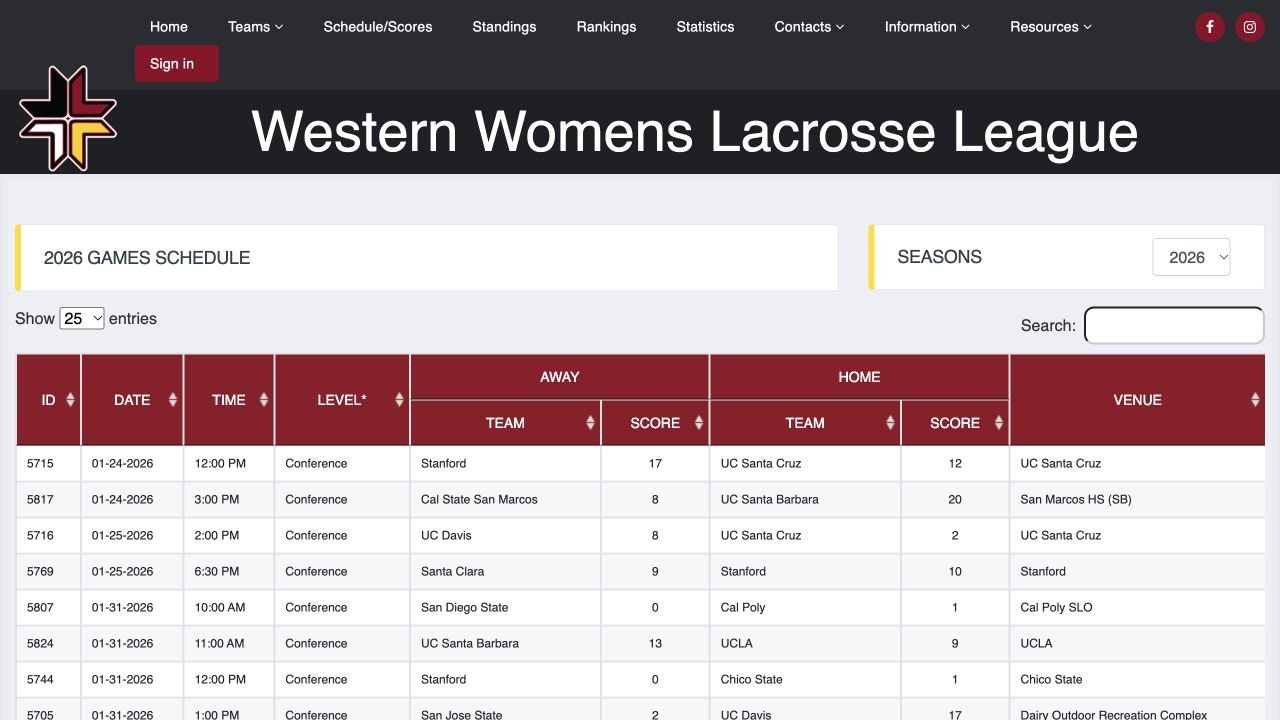
WWLL Collegiate Scheduling Engine
A custom multi-division collegiate sports scheduling application managing team proposals, travel pod clustering, facility holds, coordinator review, and public schedule export for the Western Women’s Lacrosse League.
Online Officials Evaluation System
A specialized referee and officials management software web application designed for football and lacrosse associations. Evaluators grade officials live from the sidelines using custom rubric scoring forms with historical performance archives.
BCLA Multi-Tier Registration & Rollup System
A province-wide sports management platform used by 35 community associations to register thousands of participants, process fees, manage team rosters, and preserve historical player records across minor, senior, and field lacrosse.
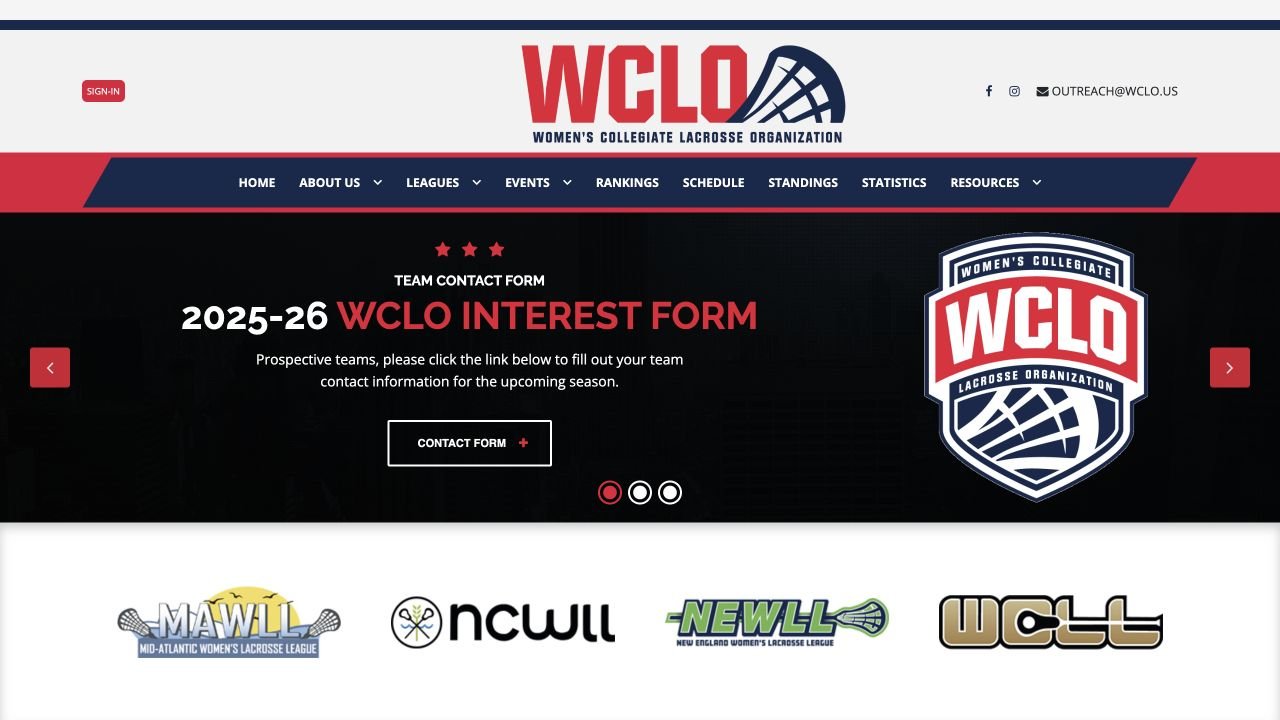
WCLO National Collegiate League Portal
A maintained public league platform connecting national collegiate news, schedules, standings, rankings, and tournament brackets for collegiate teams nationwide.
Review live production software directly. Every solution is delivered with 100% intellectual property ownership and zero platform transaction cuts.
Pre-build software specification checklist for athletic boards.
- Map the complete user hierarchy: List all administrative personas (commissioners, assigners, registrars, evaluators, coaches) and define their exact read/write permissions.
- Document bylaw constraints mathematically: Translate conference bylaws, travel pods, rest intervals, and tiebreaker cascades into formal software requirements.
- Calculate 5-year financial impact: Compare compounding commercial SaaS transaction fees against fixed custom development and maintenance costs.
- Define offline field requirements: Determine if coaches, scorekeepers, or referee evaluators must record data without reliable cellular connectivity.
- Plan payment gateway ownership: Ensure registration fees deposit directly into your association bank account via your own merchant account (e.g., Stripe) with zero intermediary platform cuts.
- Design season rollover procedures: Specify how player eligibility, team rosters, and historical standings are archived when transitioning to a new calendar year.
- Audit data sovereignty: Verify that your organization retains 100% ownership of source code, database backups, and athlete records upon project completion.
Frequently asked questions about custom sports app development.
How much does it cost to build custom sports management software?
A focused sports application—such as a custom scheduling portal or referee evaluation system—typically ranges from $15,000 to $45,000 depending on workflow complexity, role hierarchy, and external API integrations. Because you own the software, there are no ongoing per-player or per-transaction platform fees, making it significantly less expensive than commercial SaaS over a 3- to 5-year operating window.
Who owns the intellectual property and code when the build is complete?
Under Wexmoor Labs' delivery model, your sports organization owns 100% of the custom source code, database architecture, and intellectual property. We hand over the complete repository and deployment runbooks with zero vendor lock-in.
Can a custom sports application work on mobile devices without native app store downloads?
Yes. We build responsive web applications and Progressive Web Apps (PWAs) that work seamlessly on iPhones, iPads, Android devices, and laptops via any modern browser. Users do not need to install updates from the Apple App Store or Google Play Store, and evaluators can even use field forms offline when cellular reception drops.
Can our custom software connect to our existing public website or league accounting tools?
Yes. Custom applications can expose secure REST APIs or webhook integrations to syndicate schedules and standings to your public website, connect payment events directly to QuickBooks or Xero, and sync official rosters with state or national governing bodies.
How long does a custom sports software development project take?
A typical custom sports software project takes 8 to 12 weeks from initial requirements mapping and prototype wireframes through development, pre-season testing, and live administrator onboarding, scheduled to deploy ahead of your season registration or annual scheduling meeting.
Custom Sports App Development
Purpose-built sports applications for constraint-aware scheduling, referee evaluations, multi-tier registrations, and role-based league operations.
Explore service →