Competition data
Connect schedules, scores, standings, rankings, brackets, and calendars to the appropriate operational source.
Specialized sports website development and sports league website design for conferences, clubs, governing bodies, and tournaments. Connected directly to your sports scheduling website, live standings, rosters, and league operations.
The public website should reflect the source of truth for each type of information instead of creating another place for staff to copy data manually.
Connect schedules, scores, standings, rankings, brackets, and calendars to the appropriate operational source.
Maintain teams, divisions, rosters, contacts, venues, resources, and historical seasons through clear content models.
Give approved staff a practical workflow for news, announcements, tournament updates, policies, and seasonal resources.
Build semantic pages, crawlable navigation, structured metadata, responsive interactions, and accessible content patterns.
Connect enquiries, interest forms, registrations, payments, or vendor systems without duplicating responsibilities.
Plan redirects, analytics, permissions, content migration, training, support ownership, and a controlled production launch.
Map current pages, data sources, user groups, publishing owners, and critical seasonal dates.
Define navigation, page types, content models, competition data, and integration boundaries.
Create responsive journeys for supporters, teams, officials, staff, sponsors, and prospective participants.
Develop the website, CMS, integrations, forms, metadata, analytics, and permission model.
Migrate content, validate data, test redirects and forms, train editors, and monitor release.
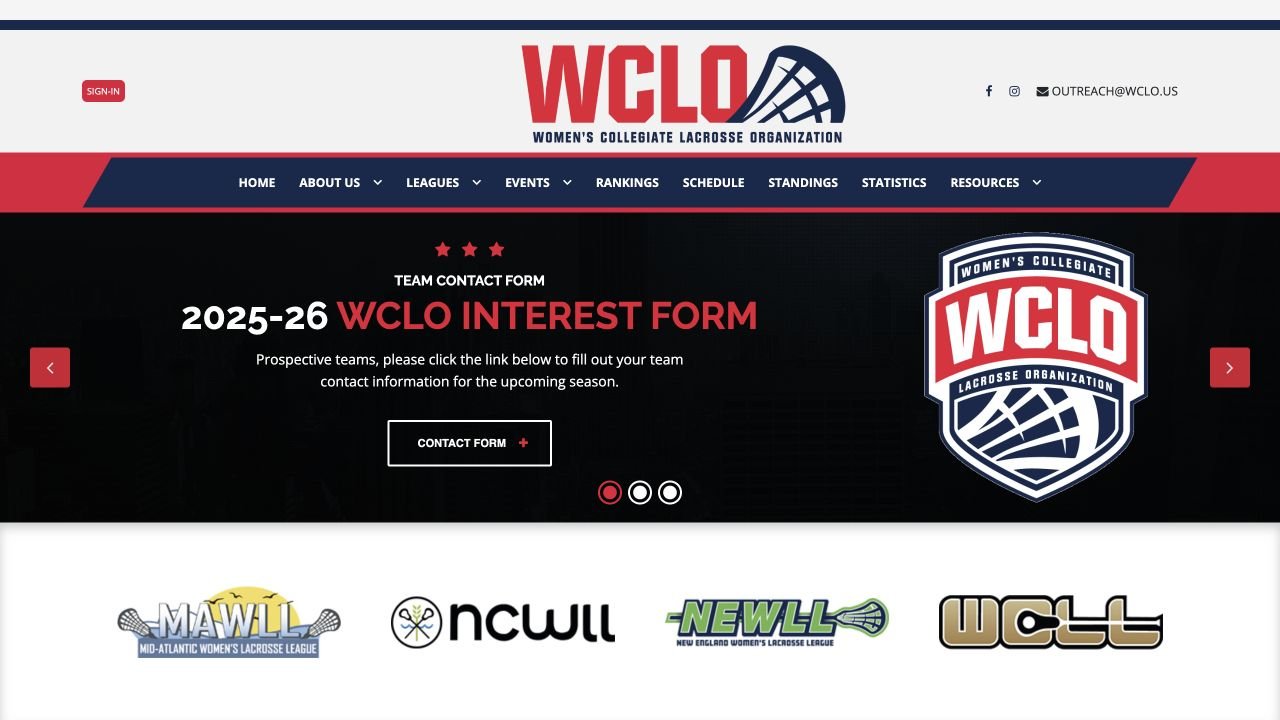
News, schedules, standings, rankings, statistics, resources, and tournament publishing for a national collegiate organization.
Read the WCLO case study →
A public and member-facing website supporting recruitment, clinics, rules, resources, and seasonal assignment information.
Read the BCFOA case study →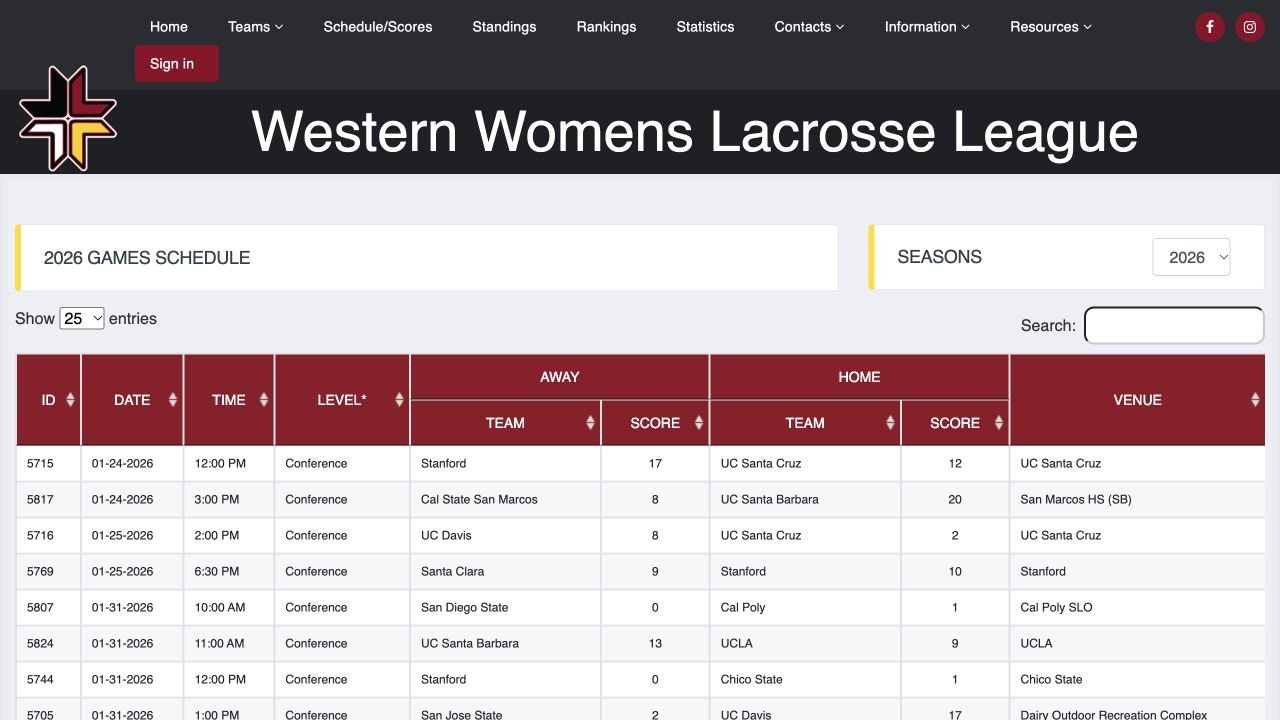
A collegiate lacrosse website connected to schedules, results, standings, rankings, statistics, and league resources.
See the connected scheduling work →Move from public websites and custom applications to scheduling, university athletics, planning guides, and reviewable work across registration, officiating, and league operations.
A sports website often needs structured schedules, standings, results, rosters, team pages, tournament information, resources, and time-sensitive publishing. The public experience and the operational source of that information need to be planned together.
Potentially. We review the current system, API or export options, data ownership, update frequency, and error handling before recommending an integration.
Yes. The content model and editing permissions are designed around the people responsible for publishing, while competition data can remain connected to its operational source.
Yes. A redesign scope can include URL inventory, redirect mapping, metadata, structured data, analytics continuity, launch checks, and post-launch monitoring.
Share the current platform, competition data, publishing responsibilities, and the next important seasonal date.