The visual design and messaging no longer represent the business or make the next step clear.
Website Redesign · Scope After Audit
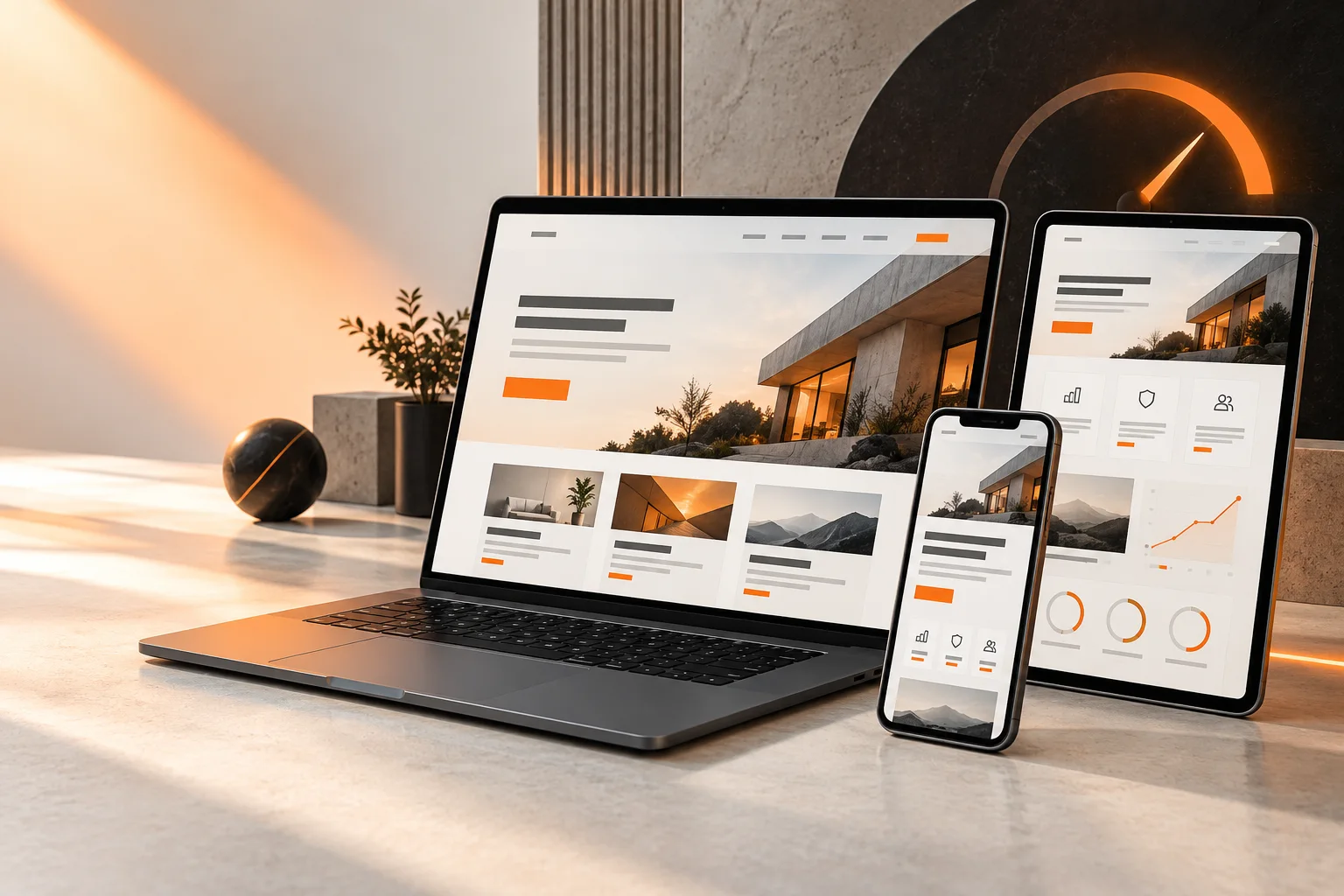
Turn an outdated website into a faster, clearer experience.
We audit what already works, redesign the buying journey, improve performance, and plan the migration so valuable pages and search signals are protected.
Audit-ledRedesign decisions
SEO-safeMigration planning
MeasuredLaunch validation
AUDIT BEFORE REDESIGN
Improve the experience without discarding what already works.
A redesign affects content, URLs, analytics, search visibility, and internal workflows as well as visual design. We establish a baseline first, then make deliberate changes around buyer needs and measurable site health.
Mobile usability, page speed, accessibility, or content management make the current site difficult to use.
A rebrand, platform move, or structural change creates migration and search visibility risks that need a clear plan.
REDESIGN SCOPE
What a considered website redesign includes
Every engagement is scoped around the decisions, integrations, and launch conditions that matter to this service. The result is a working system with a clear handover—not a stack of disconnected deliverables.
Current-Site Audit
Review priority pages, analytics, search performance, mobile behavior, accessibility, content, and technical constraints before design decisions begin.
UX & Content Architecture
Clarify buyer journeys, navigation, page responsibilities, calls to action, and the content that should be retained, improved, consolidated, or retired.
Visual & Responsive Redesign
Create an adaptable interface system that reflects the brand and works clearly across phones, tablets, laptops, and large screens.
Performance & Accessibility
Improve asset delivery, rendering, layout stability, semantic structure, keyboard access, focus behavior, and reduced-motion support.
SEO-Safe Migration
Inventory existing URLs, preserve valuable paths where practical, map necessary redirects, and carry forward metadata, schema, and internal links.
Analytics & Launch Plan
Validate forms and conversion events, complete pre-launch checks, monitor crawl and indexing signals, and document the handover.
REDESIGN CONTINUITY
A redesign has to protect more than the visual identity
The strongest redesigns improve the customer experience while preserving useful content, dependable measurement, and the search signals the current site has earned.
Preserve
Keep valuable URLs, content, backlinks, metadata, and conversion paths wherever they still serve the business.
Improve
Refine positioning, page structure, mobile UX, accessibility, performance, and content management.
Validate
Test redirects, canonicals, forms, analytics, structured data, responsiveness, and crawlability around launch.
REDESIGN ROADMAP
A controlled redesign from audit to launch
You see working progress throughout the engagement. Each stage closes a specific risk before the next one begins, with direct access to the person designing and building the solution.
Audit
Establish baselines for content, search, analytics, performance, accessibility, and conversion paths.
Plan
Define the sitemap, page responsibilities, migration rules, measurement needs, and acceptance criteria.
Design
Create responsive page patterns around real content, priority buyer journeys, and brand requirements.
Build & Migrate
Implement the approved system, prepare content, map redirects, and connect forms, CMS, and analytics.
Validate & Launch
Test the site before release and monitor key technical, search, and conversion signals afterward.
01Custom storefrontClient-branded interface
02Product discoveryMenus and product data
GRAPHQLCommerce APIQueries and ordering workflows
03Customer actionsCart and checkout journey
04Business systemsOperational data
HEADLESS COMMERCE EXPERIENCE
Custom storefront built on the Dutchie Plus GraphQL API
Wexmoor Labs built a custom headless storefront for a client using the Dutchie Plus GraphQL API. The implementation connected a tailored front-end experience to commerce data and customer ordering workflows without relying on a standard embedded storefront.
Custom UIClient-branded storefront
GraphQLAPI-driven commerce data
HeadlessIndependent front end
This was a client implementation using Dutchie technology, not work commissioned by or completed in partnership with Dutchie. The client website is no longer live, so the project is presented as historical delivery experience rather than a public case study.
Built with
Laravel / PHPBlade / Tailwind CSSAccessible HTMLCore Web VitalsSchema.orgRedirect MappingAnalytics Validation
Planning guide
What to Prepare Before a Website Redesign: Scope, URLs, Integrations & Approvals
A practical, non-technical checklist for business owners to avoid budget overruns, preserve SEO rankings, and launch on time.
Read the planning guide →Questions before we begin
Clear answers, before any commitment.
Will a website redesign affect search visibility?
It can when valuable URLs, content, metadata, internal links, or structured data change without a migration plan. We inventory those signals and validate the new site before and after launch.
Can you keep our existing CMS or platform?
Yes, when it remains suitable for the team and the redesigned experience. We recommend a platform change only when the current system creates a clear delivery, performance, security, or editing constraint.
Can a redesign be completed in phases?
Often. A phased release can prioritize the homepage and important commercial templates before lower-priority sections, provided navigation, tracking, and migration behavior remain coherent.
Can your website redesign company move our website to a new platform?
Yes. When a platform move is justified, we plan content and data migration, URL redirects, metadata, analytics, integrations, launch validation, and rollback requirements before the new site replaces the current one.
What shapes the final scope and investment?
Scope depends on the number of templates and URLs, content readiness, platform or CMS changes, integrations, migration complexity, stakeholder review, and post-launch support.
PLAN THE REDESIGN
Ready to improve the site without losing what already works?
Share the current website, the business changes behind the redesign, and the main problems you want the new experience to solve.
Start a redesign conversation →Audit, migration risks, and priorities reviewed before scope