Visitors struggle to understand what you do, who you serve, or how to get a quote.
Website Development · 2–4 Weeks Scope
Build a business website around how your company sells.
We plan, design, and build a custom website for your business around clear buyer journeys, maintainable content, strong performance, and a dependable launch.
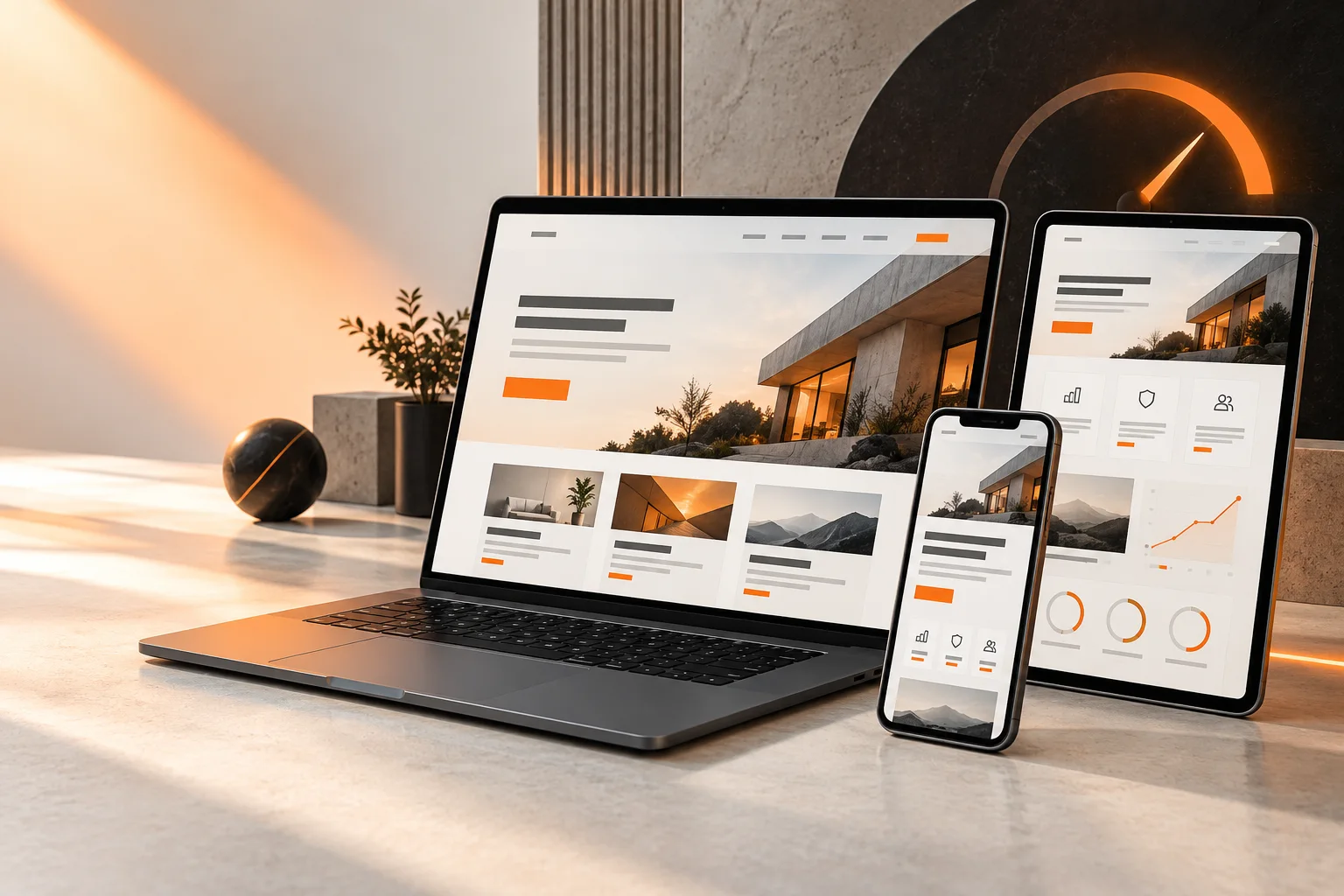
ResponsiveAcross current devices
AccessibleInteraction foundations
MeasuredLaunch validation
CONVERSION ARCHITECTURE
Build your business website as a durable sales and publishing platform.
Whether you need a new business website, a corporate website, or a digital product website, our business website design process translates services, buyer questions, content responsibilities, and technical requirements into a focused site your team can operate and extend. Performance, accessibility, search foundations, and measurement are planned with the build rather than added at the end.
A new service, brand, or business needs a credible website with a maintainable content structure.
Standard business website platforms cannot support the integrations, publishing workflow, or performance requirements you have defined.
FULL-CYCLE SPECIFICATION
What is included in company website design and development
Every engagement is scoped around the decisions, integrations, and launch conditions that matter to this service. The result is a working system with a clear handover—not a stack of disconnected deliverables.
Content & Conversion Architecture
We map your service lines, common buyer objections, clear quote pathways, and navigation hierarchy to convert visitors into qualified leads.
Responsive Custom Build
Lightweight, responsive components developed for clear reading, predictable interaction, and reliable use across current devices.
Conversion & Tool Integrations
Connect quote request forms, booking calendars, CRM pipelines, and notification webhooks without unnecessary third-party plugins.
Search Engine Foundations
Clean semantic HTML, OpenGraph tags, JSON-LD Schema (Organization / ProfessionalService), dynamic sitemaps, and optimized Core Web Vitals.
CMS, Analytics & Launch Setup
Configure practical content editing, consent-aware measurement, form delivery, deployment, and the checks needed for a controlled launch.
Handover & Support Planning
Production deployment, documentation, access handover, training where needed, and clearly agreed post-launch support terms.
A DURABLE WEBSITE FOUNDATION
Built around the content, users, and team that depend on it
The technology follows the business requirements. Each decision should improve clarity for visitors and reduce avoidable maintenance for the people running the site.
Clear customer journeys
Navigation, page responsibilities, proof, and calls to action reflect the questions buyers need answered.
Maintainable publishing
Content models and editing controls give the team appropriate flexibility without weakening the design system.
Measured launch quality
Responsive behavior, accessibility, forms, metadata, analytics, security, and performance are checked before release.
DELIVERY ROADMAP
A structured path from requirements to launch
You see working progress throughout the engagement. Each stage closes a specific risk before the next one begins, with direct access to the person designing and building the solution.
Discovery & Architecture
Clarify audiences, content, functional requirements, integrations, and the primary conversion paths.
UX Design & Prototyping
Craft responsive wireframes, typography systems, and high-fidelity layouts.
Development
Develop reusable, semantic components and connect the agreed CMS, forms, analytics, and integrations.
Quality Review
Validate responsive behavior, accessibility, performance, metadata, structured data, forms, and browser support.
Launch & Handover
Deploy the production site, complete launch checks, document access, and agree the support plan.
01Custom storefrontClient-branded interface
02Product discoveryMenus and product data
GRAPHQLCommerce APIQueries and ordering workflows
03Customer actionsCart and checkout journey
04Business systemsOperational data
HEADLESS COMMERCE EXPERIENCE
Custom storefront built on the Dutchie Plus GraphQL API
Wexmoor Labs built a custom headless storefront for a client using the Dutchie Plus GraphQL API. The implementation connected a tailored front-end experience to commerce data and customer ordering workflows without relying on a standard embedded storefront.
Custom UIClient-branded storefront
GraphQLAPI-driven commerce data
HeadlessIndependent front end
This was a client implementation using Dutchie technology, not work commissioned by or completed in partnership with Dutchie. The client website is no longer live, so the project is presented as historical delivery experience rather than a public case study.
Built with
Laravel & BladeTailwind CSSAlpine.jsLivewireViteJSON-LD SchemaCloudflare CDNGraphQL APIsPostgreSQL / MySQL
Planning guide
How to Plan a Company Website: Pages, Content, Cost & Launch
A practical planning guide for defining the website’s purpose, pages, content, features, platform, budget, responsibilities, and launch checks before design begins.
Read the planning guide →Questions before we begin
Clear answers, before any commitment.
Which technology stack do you build with?
We build with modern, high-performance stacks like Laravel (Blade/Alpine/Tailwind) or modern headless frameworks, tailored to your content velocity, internal workflows, and infrastructure requirements.
Is ongoing SEO included?
Technical and on-page foundations such as metadata, semantic structure, schema where appropriate, canonical URLs, sitemap coverage, and performance review are included in the build. Ongoing search work requires a separate scope.
Who owns the website and source code?
Ownership and licensing depend on the agreed platform, third-party services, and project contract. We document the code, accounts, assets, and access that will be transferred before delivery.
Can you build a headless e-commerce storefront?
Yes. Wexmoor Labs has built a custom headless storefront for a client using the Dutchie Plus GraphQL API. The client website is no longer live, so we describe it as historical delivery experience rather than a public case study. For a new project, we confirm the current platform API, licensing, compliance, checkout, and support requirements before recommending an architecture.
Can you use AI to build websites?
AI can accelerate research, content organization, prototyping, and quality checks, but it does not replace strategy, design judgment, accessibility review, secure development, or human approval. We use appropriate tools while keeping the finished business website deliberate, maintainable, and owned by the client.
Which business website platform should we use?
The right platform depends on publishing needs, integrations, internal ownership, security, performance, and long-term maintenance. We recommend a CMS or custom stack after those requirements are clear rather than forcing every company website onto one platform.
What shapes the final scope and investment?
Scope depends on page count and template variety, content readiness, the chosen website platform, CMS needs, bespoke forms or tools, integrations, deployment requirements, and post-launch support.
ELEVATE YOUR DIGITAL PRESENCE
Planning to build your business website for its next stage?
Share the audiences, services, content, and systems your new website needs to support. We will map the practical website development scope and launch requirements.
Start a website project →Requirements, content readiness, and launch needs reviewed before scope